Ritual7 min read
How to use a gua sha: a ten-minute ritual, neck first
A step-by-step guide to using a gua sha: why the neck comes first, how to hold the tool, and a ten-minute order for the face and body you can return to every day.
By GO:GYEOL
To use a gua sha, smooth on a face oil or balm, begin at the neck, then glide the tool almost flat along the skin in slow, outward strokes: neck, jaw, cheeks, under the eyes and forehead. Ten minutes is all it takes.
Gua sha is one of the simplest rituals you can keep: a smooth tool, a little glide and ten quiet minutes. It comes from Chinese tradition, where a smooth-edged tool is drawn across the body in long, repeated strokes. At GO:GYEOL we bring a slow-beauty way of thinking to it, shaped by the Korean word 고결, which speaks of purity, grace and a higher standard of care in everyday things. This guide walks you through the whole ritual, step by step, so you can pick up your tool tonight and know exactly what to do.
What does gua sha do?
Gua sha helps depuff, ease muscle tension and boost circulation, so skin looks lifted and contoured and feels awake. For centuries, East Asian tradition has used it to encourage lymphatic drainage and release the fascia. The research is still young, but a 2025 randomised trial found measurable changes in facial contour and muscle tone after eight weeks of ten-minute sessions; our article on the research behind gua sha explains what the studies did and did not show.
What do you need for gua sha?
- Your gua sha. The Facial Sculpt Ceramic Gua Sha comes as a pair of white glazed ceramic tools for the neck, jaw, cheeks and brow. The Body Sculpt Ceramic Gua Sha is weighted, with a wave-edged ring and a palm grip, for the legs, arms and stomach.
- Something for glide. On the face, a face oil or serum, or the GO:GYEOL Nourishing Balm in your evening ritual. On the body, the balm or a body oil any time. The tool should glide, never drag.
- Ten minutes. Morning or night, whichever you will keep.
Before you begin
Start with a clean face and clean hands. Warm a few drops of face oil between your palms and press it over your neck, jaw and cheeks. Hold the tool for a moment so it settles in your hand. Ceramic is cool to the touch straight from the shelf, so there is no need to chill it first.
Two rules carry through the whole ritual. Hold the tool almost flat against you, at an angle of 15 to 30 degrees, so the long edge does the work rather than the tip. And keep the pressure comfortable: firm along the neck and jaw, feather-light under the eyes. More pressure does not make it better.
Step 1: the neck, always first
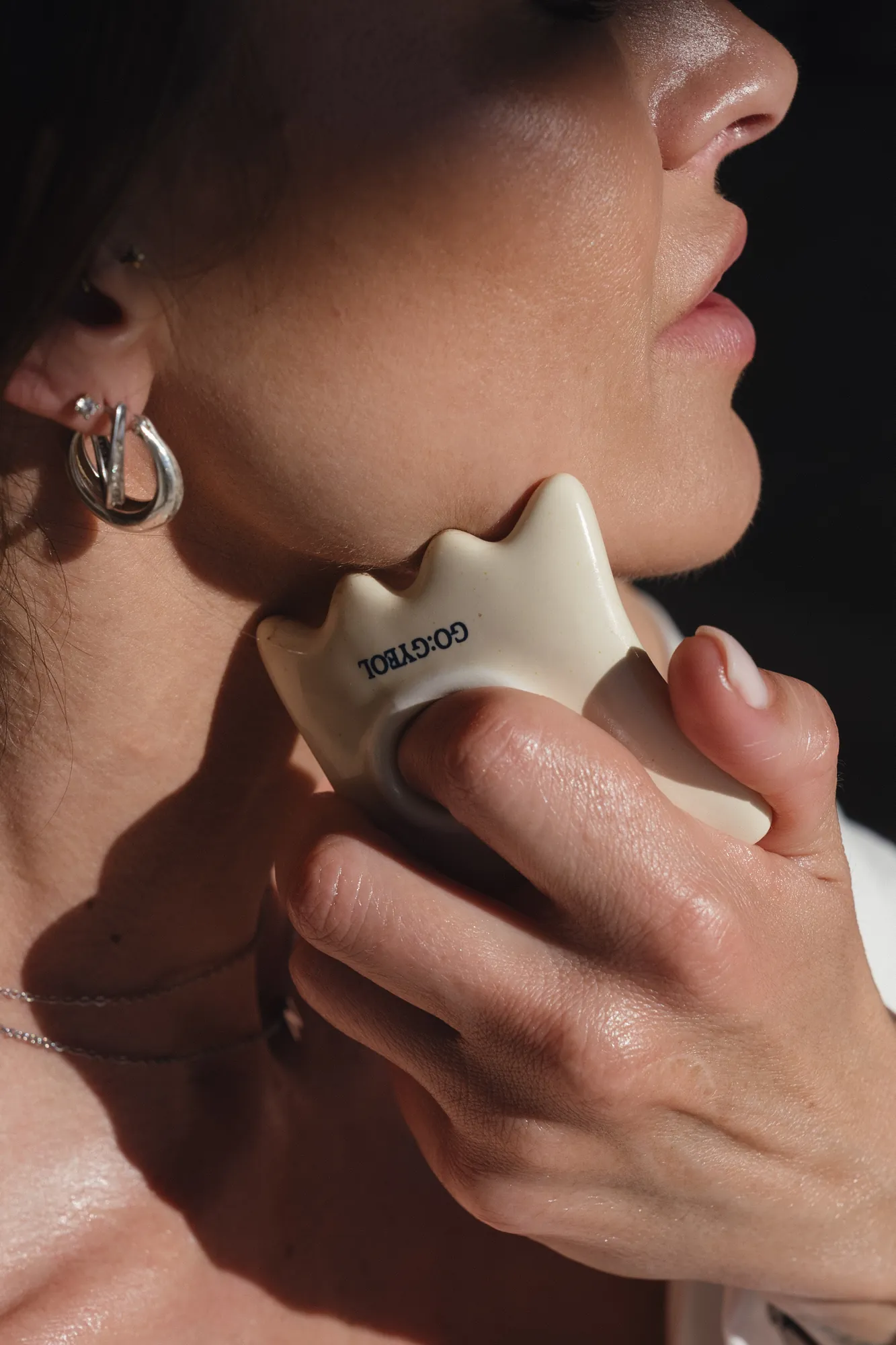
Every GO:GYEOL ritual begins at the neck. Place the long edge of the tool just below your ear and draw it slowly down the side of your neck to the collarbone. Make three slow strokes on each side, then move to the front of the neck with the same gentle, downward strokes.
In gua sha tradition the neck comes first, so the strokes that follow have a clear path for lymphatic drainage. Starting here also sets the pace for everything that follows: slow, deliberate and unhurried. The neck is also the part of a routine that is easiest to skip, and beginning there means it is never left out.
Step 2: the jawline
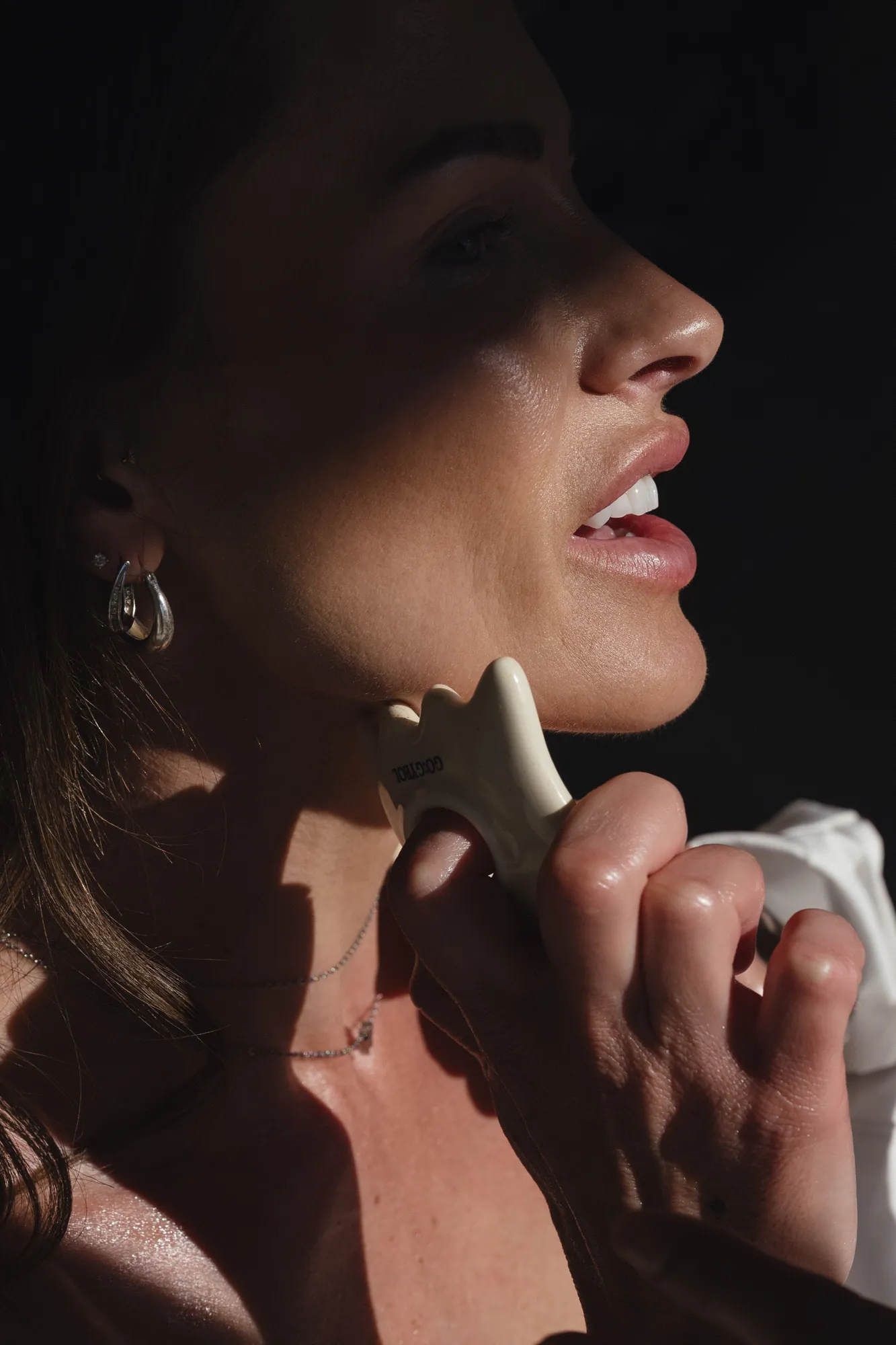
Hold the tool almost flat, with the curved edge resting along the jaw. Glide from the centre of your chin out to just below the ear in one smooth stroke. Repeat five or six times on each side, to ease the tension the jaw holds and sculpt its contour. With the face pair you can work both sides at once, in matching strokes, one tool in each hand.
Step 3: the cheeks
Move up to the cheekbones. Start beside the nose and glide outward along the cheekbone to the ear, with moderate pressure. Five strokes on each side is plenty to depuff and lift. Keep the tool flat and the movement slow. The aim is an even, unbroken stroke, not speed.
Step 4: under the eyes
Use the flat edge and the lightest touch of the whole ritual. Glide from the inner corner of the eye to the outer corner, no more than three strokes on each side. If you are ever unsure, use less pressure, not more.
Step 5: the forehead
Finish with upward strokes from the brow to the hairline, working across the forehead in sections. Five strokes in each section, smooth and steady. Some people like to end with a few slow strokes along the scalp, using the wave-edged side of the tool.
Adding the body
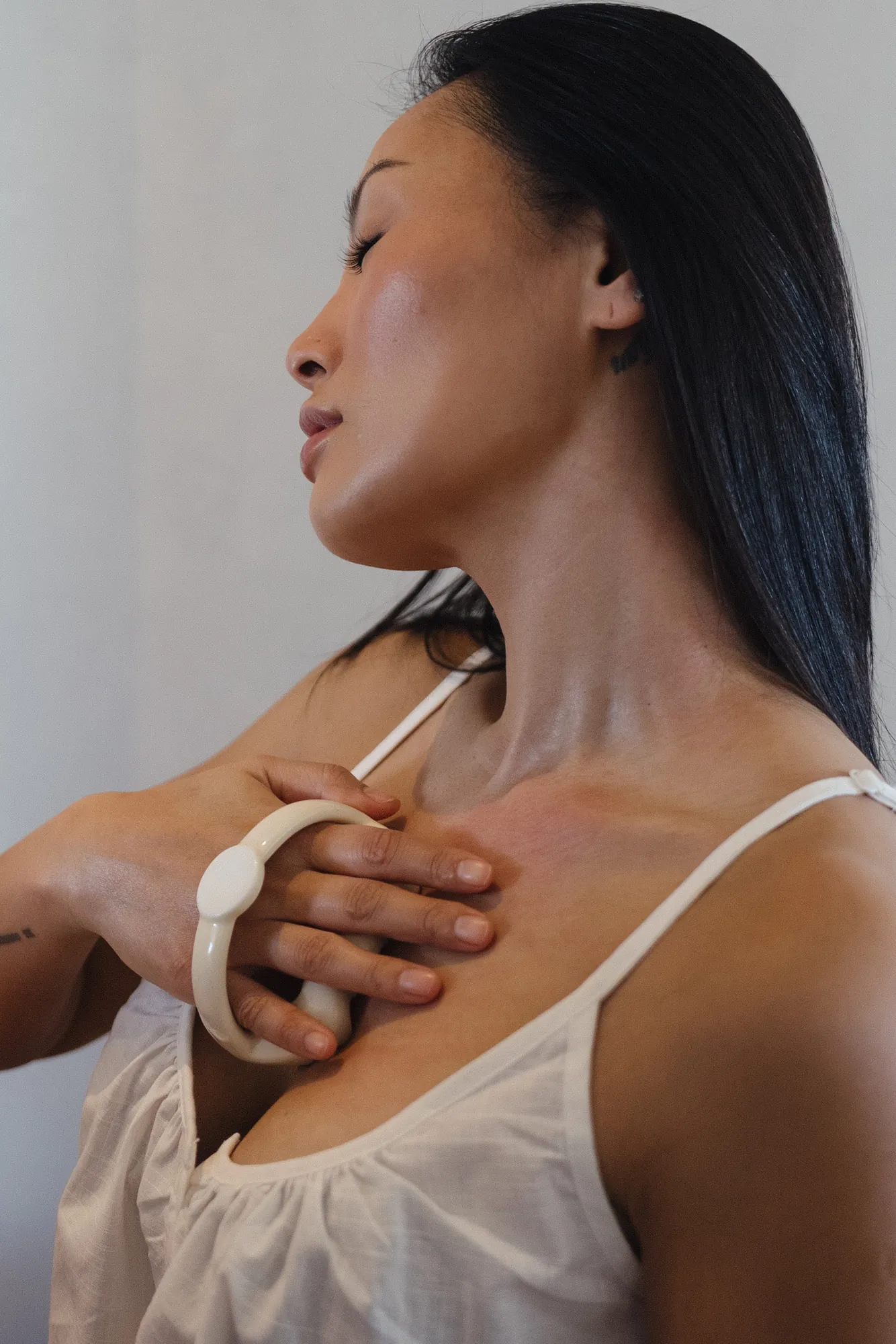
If you have the body tool, the same principles apply on a larger scale. Apply a body oil or the Nourishing Balm generously to the area you are working on. On the legs, use long upward strokes from ankle to knee, then knee to hip, five to eight strokes on each part, to boost circulation and leave the legs feeling invigorated. On the arms, glide upward from wrist to elbow, then elbow to shoulder. On the stomach, make slow clockwise circles around the navel with light to moderate pressure. The ritual page shows every movement in order.
A ten-minute order you can keep
- Neck: about two minutes, three slow strokes down each side, then the front.
- Jawline: about two minutes, five or six strokes on each side.
- Cheeks and under the eyes: about three minutes.
- Forehead and scalp: about two minutes.
- Care: a final minute to wipe the tool clean and put it away.
On days when you have more time, add a few minutes for the body. On busy days, the neck and jaw alone are still a ritual.
How often should you use gua sha?
Ten minutes a day suits gua sha better than a long session once a week. Keep your tool somewhere you will see it, beside your face oil or on the bathroom shelf, so picking it up becomes part of the day. Many people like the evening, when there is nowhere else to be. Others prefer the quiet of the early morning, with a face oil for glide. Choose the time you will actually keep.
When you finish, rinse the tool under warm water with a little mild soap, pat it dry and store it flat or in its pouch. Our guide to cleaning and caring for a ceramic gua sha covers the details.
New to gua sha? The Face Ritual Set brings the face pair and the Nourishing Balm together, and the Complete Ritual Set holds the face pair, the body tool and the balm in one set.
Frequently asked questions
What does gua sha do for the face?
Slow strokes help depuff, ease tension in the jaw and neck, and lift and contour, so skin looks sculpted and awake. Gua sha has been used in East Asian tradition for centuries to encourage lymphatic drainage.
How long should a gua sha ritual take?
Ten minutes is all it takes: about two for the neck, two for the jaw, three for the cheeks and under the eyes, two for the forehead and one to clean the tool.
Why does the ritual start at the neck?
The GO:GYEOL ritual always begins at the neck, with three slow strokes down each side from the jaw to the collarbone. It sets an unhurried pace for the rest of the ritual and makes sure the neck is never skipped.
What angle should I hold the tool at?
Almost flat, at 15 to 30 degrees, so the long edge glides along rather than the tip pressing in.
Can I use a gua sha without oil?
We don’t recommend it. Without something for glide, the tool drags. Use a face oil or serum on the face, and a body oil or the Nourishing Balm on the body.
How often should I use my gua sha?
A little every day, at whatever time you will keep. Ten minutes daily suits the ritual better than a long session once a week.